
DMT Catalyst and Purification Technology: How High-Purity Dimethyl Terephthalate Is Produced at Stable Scale
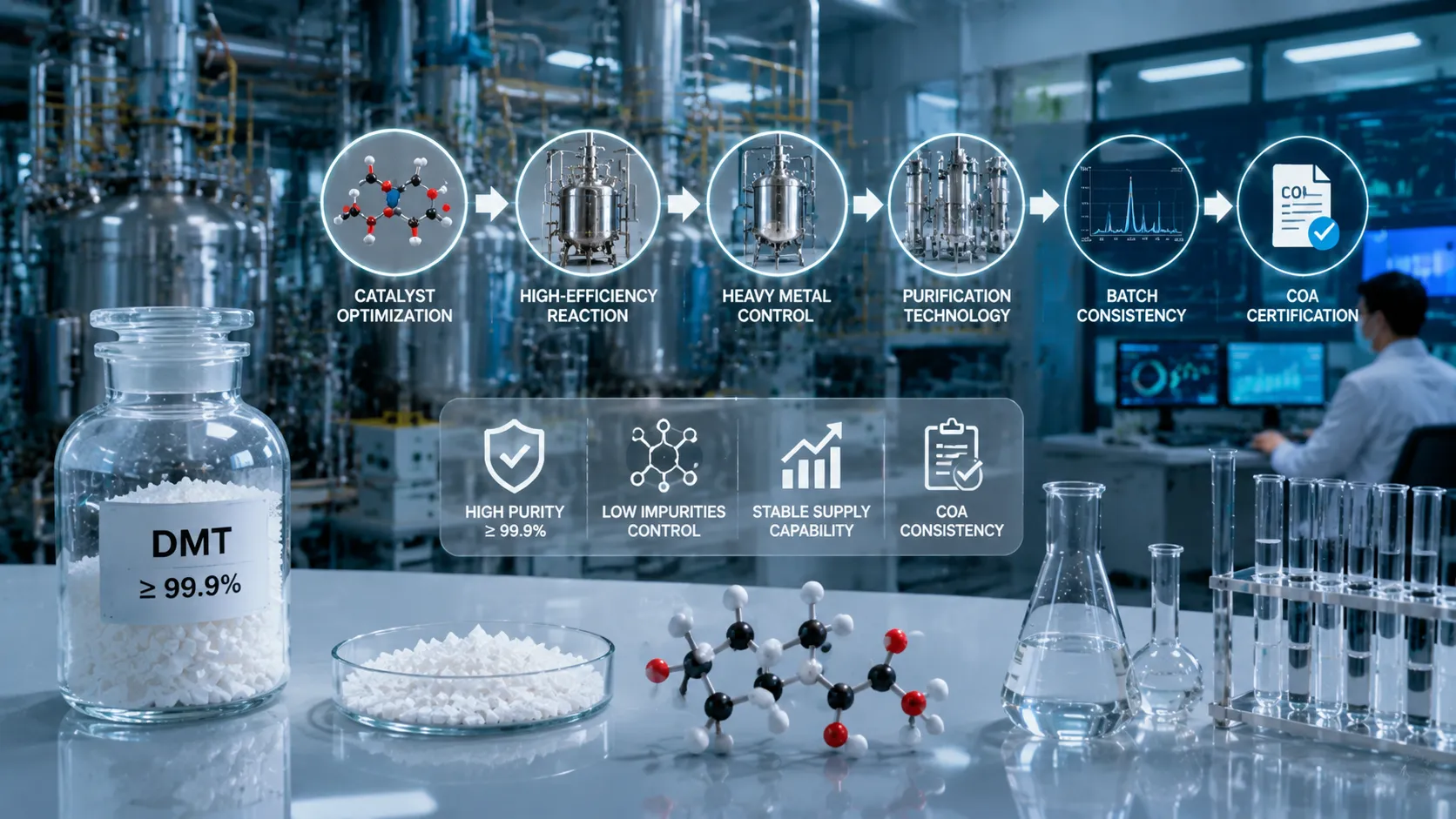
This article explains catalyst systems, reaction efficiency, heavy-metal control, purification and batch stability in DMT production, showing how suppliers maintain purity ≥99.9% and consistent COA delivery.
TL;DR
- This article explains catalyst systems, reaction efficiency, heavy-metal control, purification and batch stability in DMT production, showing how suppliers maintain purity ≥99.9% and consistent COA delivery.
- Keywords: DMT catalyst · DMT purification · high-purity DMT · batch consistency · heavy metal control
The Catalyst System Is What Makes DMT Production Repeatable
DMT production runs through esterification, transesterification and refining. The catalyst system governs reaction rate, conversion, by-product formation and how difficult downstream purification will be — which is another way of saying it determines final purity, colour, acid value and batch-to-batch stability.
Conventional catalyst types compared
| Catalyst type | Advantage | Limitation |
|---|---|---|
| Alkali metal carbonates Na₂CO₃, K₂CO₃ | Low cost | Requires high temperature and pressure 180–200 °C, 0.5–1.5 MPa |
| Zinc salts Zinc acetate | Higher catalytic activity | Heavy-metal contamination concerns Constrains food-contact applications |
| Ionic liquids | High activity | Expensive and hard to scale |
ResourceCycle's catalysis and purification controls
The R&D team works continuously on catalyst formulation, reaction conditions, refining and analytical methods, with one goal: hold polyester-grade DMT specification at commercial scale while suppressing batch variation.
| Control dimension | Target / parameter | Notes |
|---|---|---|
| Catalytic activity | 160 °C, atmospheric | Mild conditions; no high-pressure equipment required |
| DMT purity | ≥99.9% | Polyester-grade target, GC tested every batch |
| Batch stability | COA throughout | Third-party laboratory testing plus retained-sample traceability |
| Heavy metals | ≤0.5 ppm | Near non-detect after four-stage purification; meets food-contact requirements |
Key process parameters
| ResourceCycle catalyst system | |
|---|---|
| Reaction temperature | 160 °C (20–40 °C below conventional processes) |
| Reaction pressure | Atmospheric — no pressure vessels needed |
| Reaction time | Under 2 hours (conventional processes take 8–12 hours) |
| Efficiency gain | 40%+ versus conventional catalysts |
| Regeneration | Calcination at 550 °C for 2 hours |
Frequently Asked Questions
Q1: Which catalysts are used in DMT production?
Methanolysis commonly uses zinc acetate (Zn(OAc)₂), manganese acetate (Mn(OAc)₂), tetrabutyl titanate (TBT) and solid acid/base catalysts. ResourceCycle uses a proprietary composite catalyst system that operates at lower temperature with higher selectivity and fewer by-products.
Q2: How is residual catalyst metal controlled?
A three-step approach — multi-stage distillation, ion exchange, and chelating resin adsorption — holds Zn, Mn and Fe residues at ≤0.5 ppm, well below the polyester-grade industry standard of ≤2 ppm.
Q3: What is the core of ResourceCycle's DMT purification?
A four-stage system: ① primary distillation to remove light components (methanol, low-boiling esters); ② activated carbon decolorization to strip aldehydes and ketones; ③ molecular sieve refining for deep dehydration; ④ secondary distillation to remove heavy components. Final purity ≥99.9%, colour ≤5 APHA.
Q4: How is batch stability assured?
Process parameters are locked per batch (temperature RSD ≤0.5%, catalyst dosing RSD ≤1%), monitored online through DCS, GC-sampled before warehousing, and cross-checked by third-party laboratory COA. Batch purity RSD is held at ≤0.05%.
Q5: What is catalyst life and recovery rate?
The catalyst system runs ≥6 months per charge, with recovery ≥95% and post-regeneration activity retention ≥90% — which materially reduces both production cost and spent-catalyst disposal burden.
Related Reading
- Dimethyl Terephthalate (DMT, CAS 120-61-6) — specifications, MSDS / COA
- Ethylene Glycol (EG / MEG, CAS 107-21-1) — specifications, MSDS / COA
- Chemical methanolysis DMT process and core technology
- DMT / EG market outlook and brand recycled-plastic commitments
- Policy: chemical recycling as a strategic emerging industry
- Case studies: Zhejiang University joint research centre and the Huanggang project
- Contact sales — DMT quotation, samples, COA requests
About ResourceCycle
Ruisaike (Hangzhou) New Materials Co., Ltd. is a chemical-process manufacturer of DMT and ethylene glycol. Annual capacity is 5,000 tonnes of DMT plus 1,600 tonnes of ethylene glycol, at purity ≥99.9% — meeting polyester-grade virgin material standards. The company operates a joint research centre with Zhejiang University, holds 12 core patents, and is certified to ISO 14001 and ISO 9001. Products serve PBT, PETG, PCTG, PET resin, polyester fibre, polyester coatings, automotive antifreeze and unsaturated polyester resin. Domestic road freight and sea export are both supported (EXW / FOB / CIF / DAP), with a 1-tonne minimum order, 7–30 day lead times, custom COA, sample requests and ESG documentation support.
Related articles
 01Technology
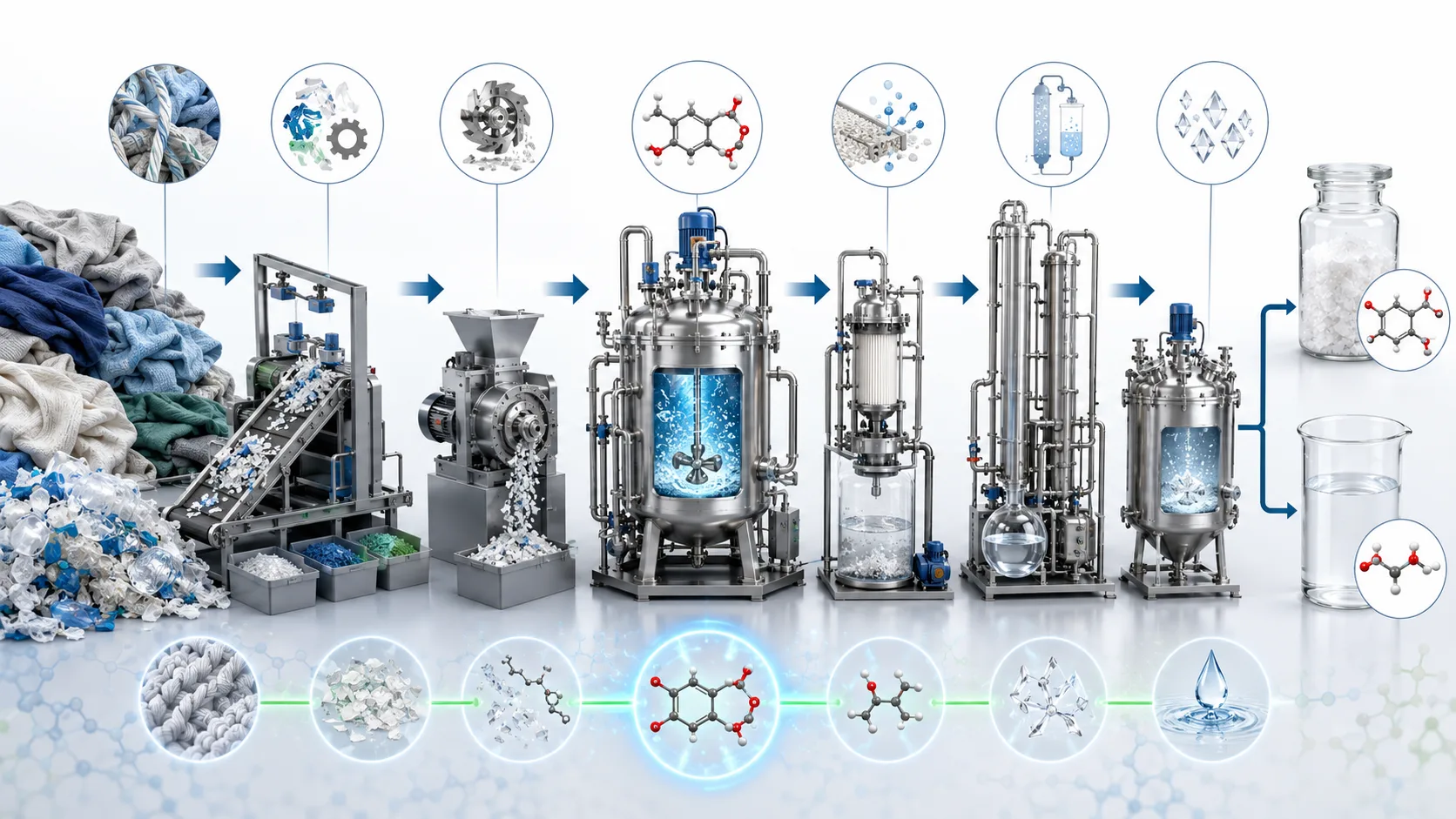
Chemical Recycling of Polyester Fiber Waste: From Waste Polyester to High-Purity DMT and Ethylene Glycol
ResourceCycle explains the four-step chemical recycling process for polyester fiber (polyester textile) waste — pre-treatment, methanolysis depolymerization, DMT and ethylene glycol separation — producing polyester-grade raw materials with purity ≥99.9% from discarded textiles.
Read more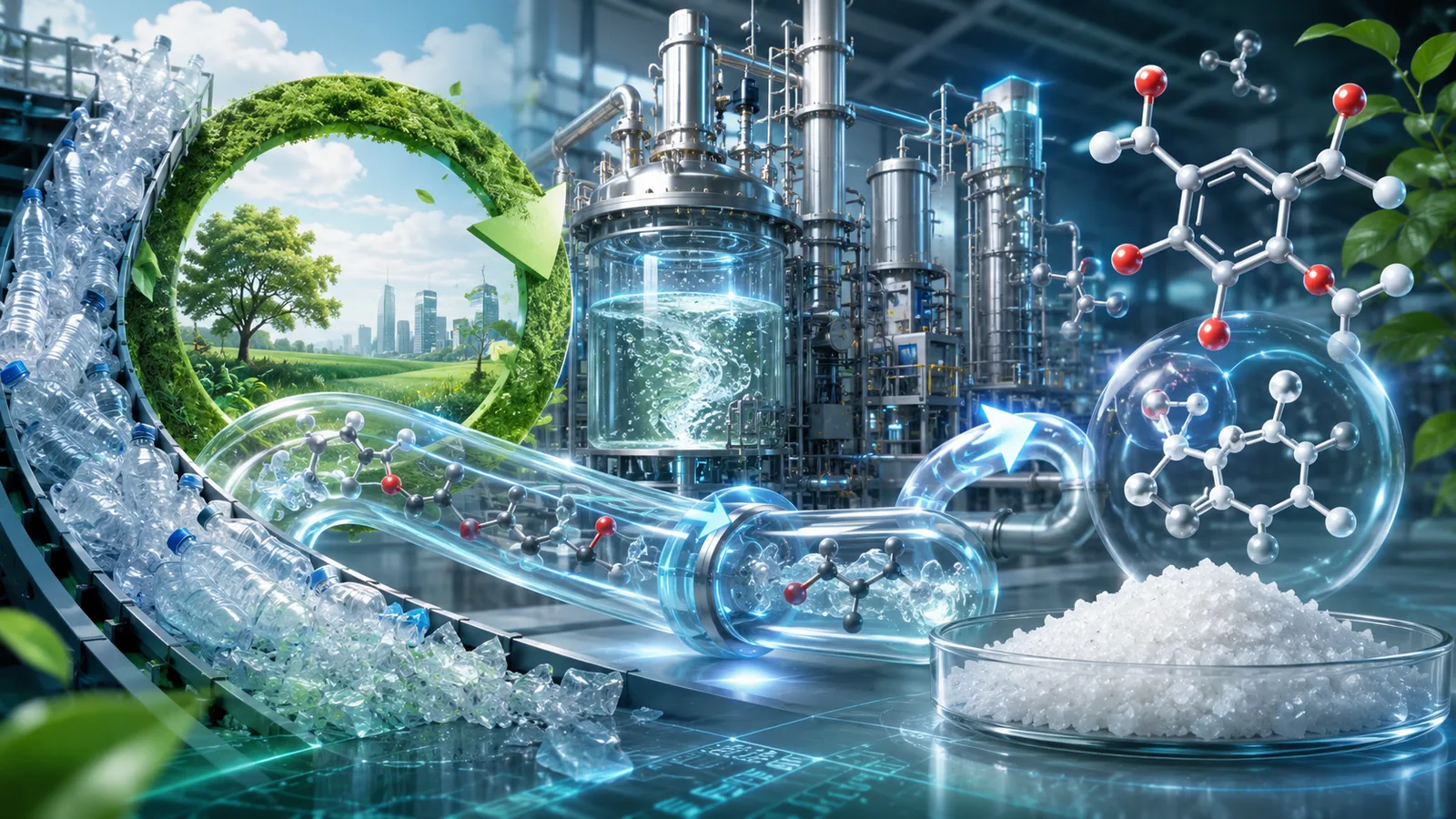 02Technology
Low-Temperature Atmospheric Methanolysis of PET to Polymer-Grade DMT: ResourceCycle's New-Quality-Productivity Process Breakthrough
ResourceCycle and the Zhejiang University Green Carbon Joint Research Center have developed a disruptive process that completes PET chemical depolymerisation at 64.5 °C atmospheric reflux — achieving 99.2% PET conversion, 99.5% DMT selectivity, 99.75% product purity, 60%+ capex reduction, 45-50% energy savings, with kiloton-per-year commercial operation.
Read more 03Technology
ResourceCycle as a Low-Carbon DMT Co-Development Platform for Global Closed-Loop Polyester Partnerships
Global brands are moving material decisions upstream to the polyester monomer level. With high-purity DMT production, methanolysis R&D and closed-loop material platform capabilities, ResourceCycle is positioned for exclusive joint development programs and long-term pre-purchase agreements.
Read more