
DMT Production Process Comparison: How Methanolysis, Esterification and Pyrolysis Routes Affect Dimethyl Terephthalate Purity
A practical comparison of DMT production routes, reaction conditions, purity, energy consumption and industrial stability, explaining why high-purity Dimethyl Terephthalate suppliers must control process quality.
TL;DR
- A practical comparison of DMT production routes, reaction conditions, purity, energy consumption and industrial stability, explaining why high-purity Dimethyl Terephthalate suppliers must control process quality.
- Keywords: DMT production process · methanolysis · esterification · pyrolysis · high-purity DMT
Why the Production Route Determines DMT Purity
Dimethyl Terephthalate (DMT, CAS 120-61-6) is a key monomer for PBT, PET, PETG and specialty polyester materials. For downstream customers, the production route affects far more than price — it directly determines purity, colour, acid value, impurity control and batch-to-batch stability.
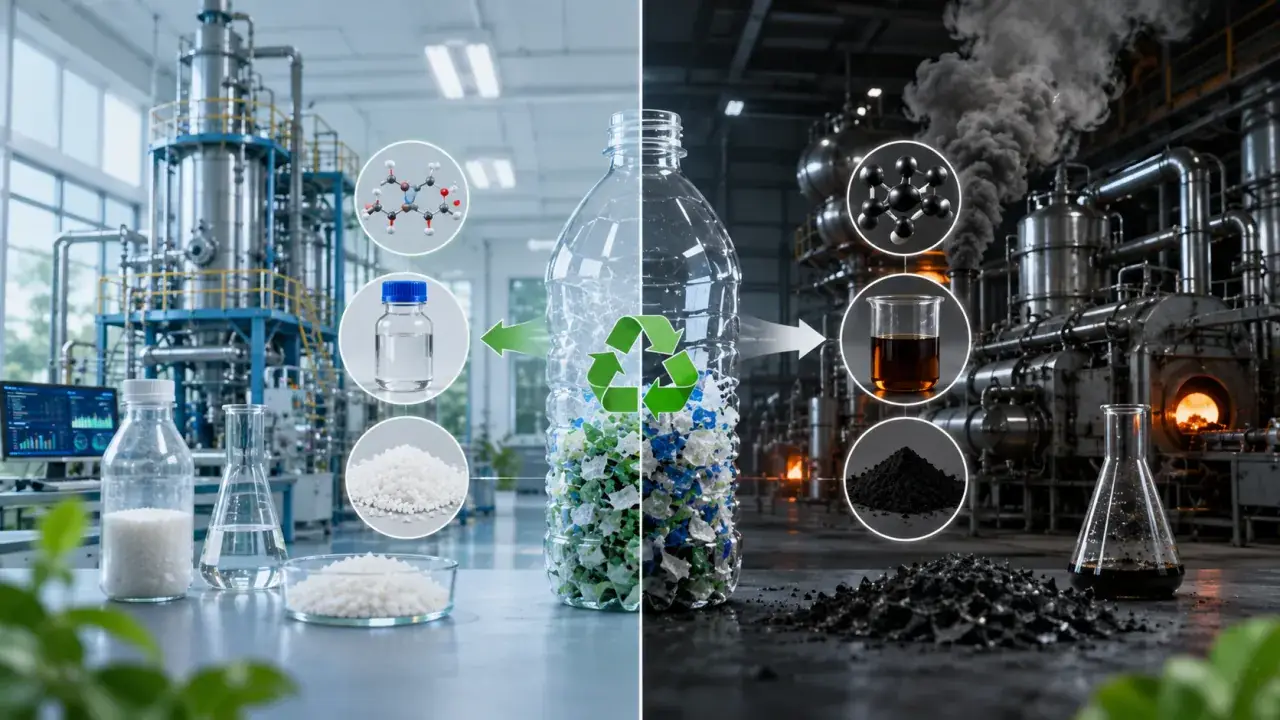
The common routes are methanolysis (alcoholysis), esterification, and pyrolysis, the last of which is oriented more toward bulk waste recovery than monomer production. Reaction conditions, product structure and downstream separation difficulty differ substantially between them. When sourcing high-purity DMT, the quote is not the whole picture: the supplier's process control and quality documentation capability matter at least as much.
Methanolysis: the route that yields high-purity monomer
Methanolysis works by using methanol or glycol solvents, under catalysis, to break the ester bonds in the PET molecular chain — depolymerising it in a directed way into Dimethyl Terephthalate (DMT) or terephthalic acid (TPA) together with ethylene glycol (EG).
ResourceCycle's proprietary R-DMT technology is built on the methanolysis route, using a patented catalyst system that lifts recovery to an industry-leading level.
Pyrolysis: broad feedstock tolerance, wrong tool for high-purity DMT
Pyrolysis converts mixed plastics into pyrolysis oil, gas and carbon black through oxygen-free thermal cracking at high temperature (300–700 °C).
- Low feedstock requirements: handles mixed waste plastics without sorting
- Complex product slate: requires extensive downstream distillation
- Higher energy use: high-temperature operation drives up energy and equipment cost
Side-by-side comparison and what it means for buyers
| Dimension | Methanolysis | Pyrolysis |
|---|---|---|
| Product quality | High-purity recycled monomer Substitutes for petrochemical feedstock | Pyrolysis oil Mainly fuel or low-value feedstock |
| Carbon reduction | approx. 2.5 t CO₂ per tonne waste PET | Limited |
| Industrial maturity | Already at commercial scale | Still being optimised |
| Best fit | Closed-loop PET recycling | Mixed waste plastic processing |
Frequently Asked Questions
Q1: What is the difference between methanolysis, esterification and pyrolysis?
Methanolysis reacts methanol with waste PET or terephthalic acid (TPA) to produce DMT and EG directly, giving high purity and stable batches suited to polyester-grade supply. Esterification produces DMT from TPA and methanol — a mature process, but with higher energy consumption. Pyrolysis thermally cracks waste polyester before re-synthesis; colour and acid value are harder to control, and it remains largely at research stage for this purpose.
Q2: Which route is best for polyester-grade DMT at ≥99.9% purity?
Chemical methanolysis. Controlling four stages — reaction temperature, catalyst selection, distillation purification, and decolorization/deacidification — delivers purity ≥99.9%, colour ≤5 APHA and acid value ≤0.01 mg KOH/g.
Q3: How does the production route affect downstream PBT and PETG applications?
DMT purity, colour, acid value and iron content translate directly into PBT viscosity, PETG clarity and PCTG impact resistance. Polyester-grade DMT at ≥99.9% can go straight into industrial polymerisation, avoiding re-purification and reducing both energy use and reject rates.
Q4: How much less energy does the chemical DMT route use than the PTA route?
The chemical DMT process uses 30%+ less energy than the conventional PTA route, avoiding roughly 1.4 tonnes of CO₂ per tonne of DMT. Combined with recycled feedstock sourcing, this supports a complete ISO 14067 carbon footprint report for brand customers.
Q5: How do you assess the industrial stability of a DMT process?
The indicators that matter: continuous run time, batch purity RSD, catalyst life and recovery rate, by-product handling, and COA consistency. ResourceCycle's kiloton-scale Huanggang plant runs stably and provides full batch traceability.
Related Reading
- Dimethyl Terephthalate (DMT, CAS 120-61-6) — specifications, MSDS / COA
- Ethylene Glycol (EG / MEG, CAS 107-21-1) — specifications, MSDS / COA
- Chemical methanolysis DMT process and core technology
- DMT / EG market outlook and brand recycled-plastic commitments
- Policy: chemical recycling as a strategic emerging industry
- Case studies: Zhejiang University joint research centre and the Huanggang project
- Contact sales — DMT quotation, samples, COA requests
About ResourceCycle
Ruisaike (Hangzhou) New Materials Co., Ltd. is a chemical-process manufacturer of DMT and ethylene glycol. Annual capacity is 5,000 tonnes of DMT plus 1,600 tonnes of ethylene glycol, at purity ≥99.9% — meeting polyester-grade virgin material standards. The company operates a joint research centre with Zhejiang University, holds 12 core patents, and is certified to ISO 14001 and ISO 9001. Products serve PBT, PETG, PCTG, PET resin, polyester fibre, polyester coatings, automotive antifreeze and unsaturated polyester resin. Domestic road freight and sea export are both supported (EXW / FOB / CIF / DAP), with a 1-tonne minimum order, 7–30 day lead times, custom COA, sample requests and ESG documentation support.
Related articles
 01Technology
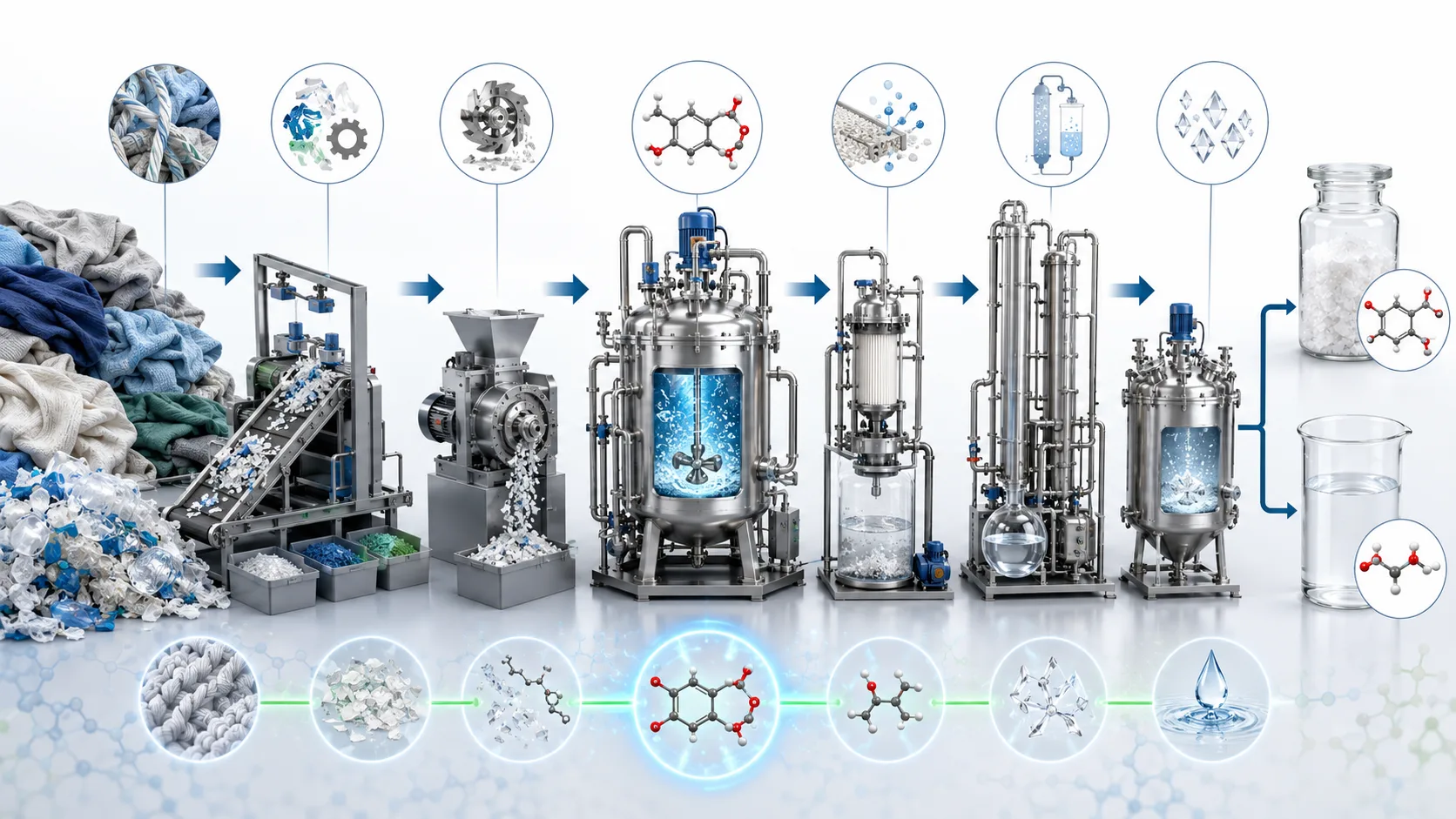
Chemical Recycling of Polyester Fiber Waste: From Waste Polyester to High-Purity DMT and Ethylene Glycol
ResourceCycle explains the four-step chemical recycling process for polyester fiber (polyester textile) waste — pre-treatment, methanolysis depolymerization, DMT and ethylene glycol separation — producing polyester-grade raw materials with purity ≥99.9% from discarded textiles.
Read more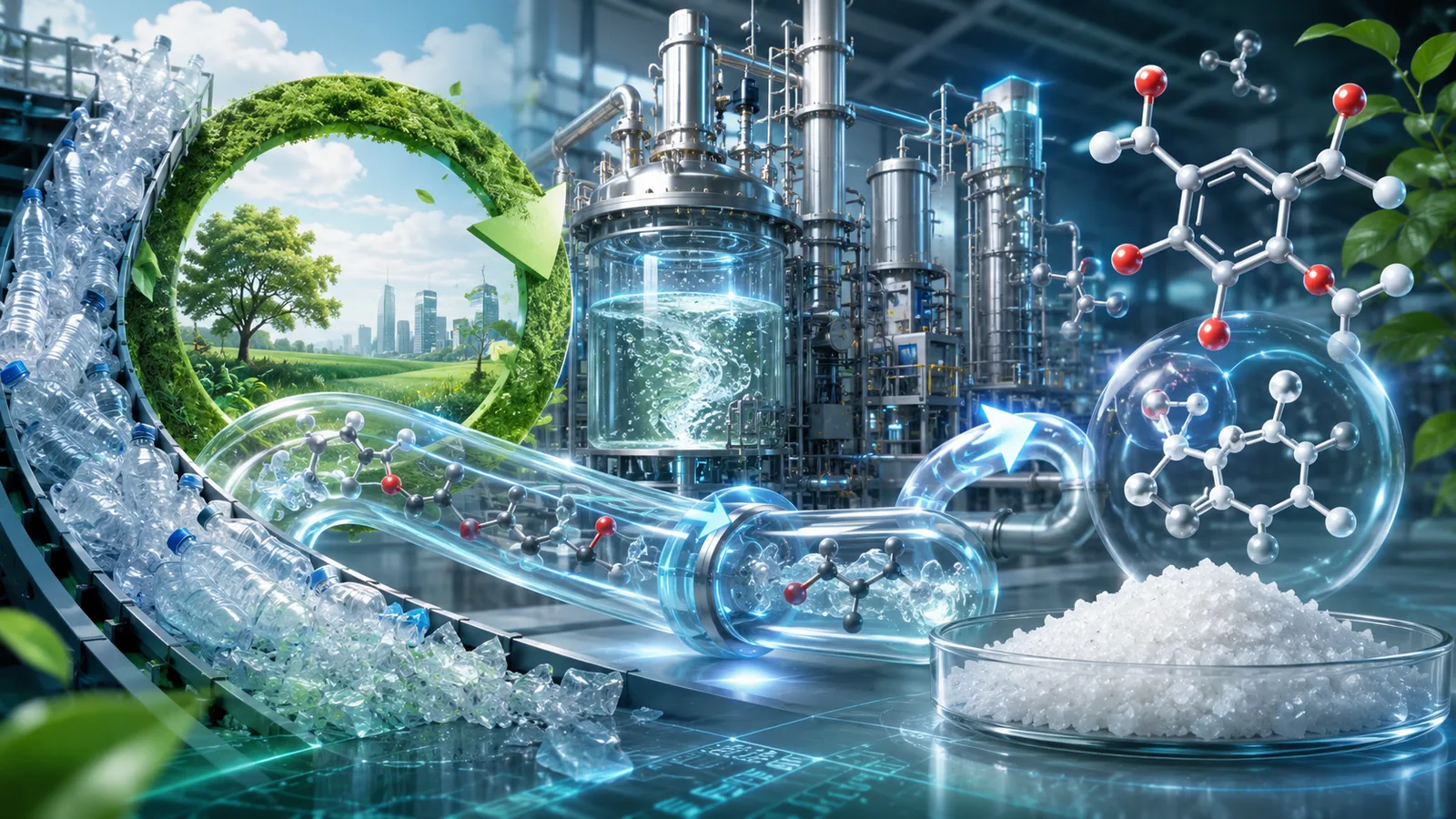 02Technology
Low-Temperature Atmospheric Methanolysis of PET to Polymer-Grade DMT: ResourceCycle's New-Quality-Productivity Process Breakthrough
ResourceCycle and the Zhejiang University Green Carbon Joint Research Center have developed a disruptive process that completes PET chemical depolymerisation at 64.5 °C atmospheric reflux — achieving 99.2% PET conversion, 99.5% DMT selectivity, 99.75% product purity, 60%+ capex reduction, 45-50% energy savings, with kiloton-per-year commercial operation.
Read more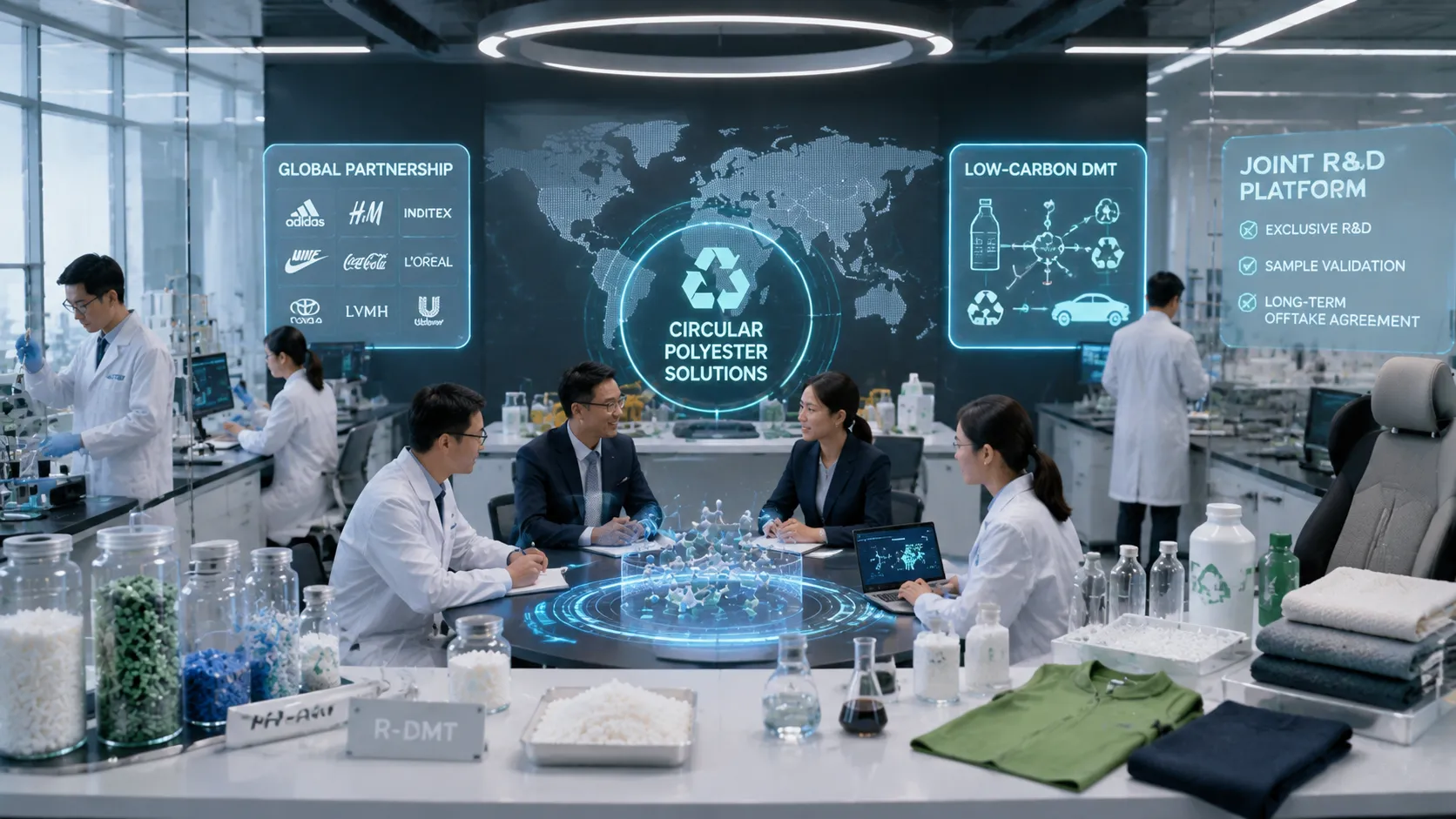 03Technology
ResourceCycle as a Low-Carbon DMT Co-Development Platform for Global Closed-Loop Polyester Partnerships
Global brands are moving material decisions upstream to the polyester monomer level. With high-purity DMT production, methanolysis R&D and closed-loop material platform capabilities, ResourceCycle is positioned for exclusive joint development programs and long-term pre-purchase agreements.
Read more