
Low-Carbon DMT Opportunities Under Carbon Neutrality Goals: How Dimethyl Terephthalate Supply Chains Support Green Polyester Materials
Under carbon neutrality and circular economy policies, low-carbon DMT, polyester-grade Dimethyl Terephthalate and transparent supply chains are becoming more important for PBT, PET and PETG customers.
TL;DR
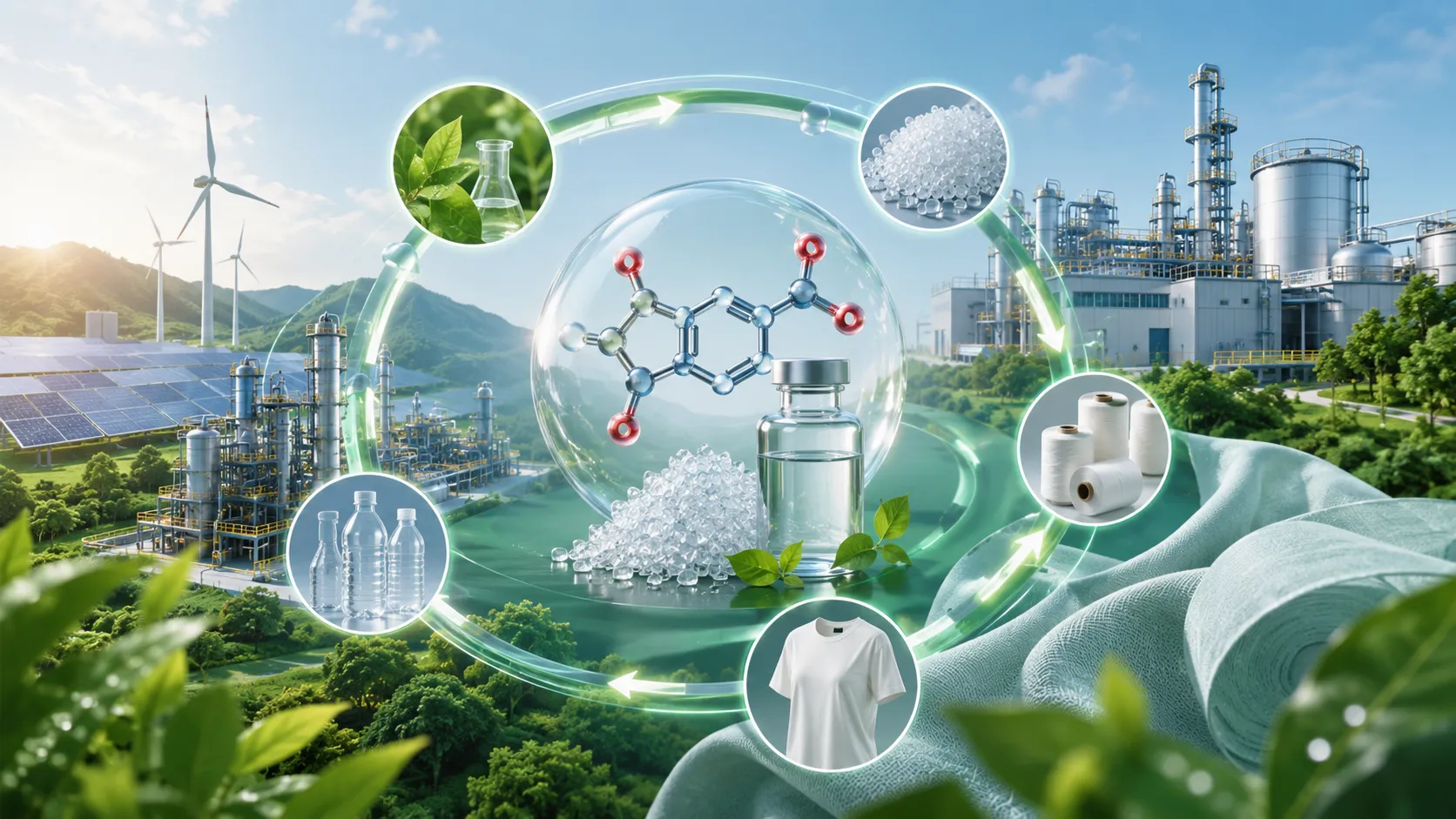
- Against the backdrop of China's dual-carbon goals, circular-economy policy and recycled-material regulation, this article looks at the long-term value of low-carbon DMT, polyester-grade Dimethyl Terephthalate and green supply chains for PBT, PET and PETG applications.
- Keywords: dual carbon goals · low-carbon DMT · Dimethyl Terephthalate supply chain · green polyester materials · polyester-grade DMT
Dual-Carbon Goals Are Pushing the Green Upgrade Upstream
As carbon-neutrality targets and circular-economy policy continue to advance, low-carbon feedstock is shifting from an ESG talking point to a genuine purchasing requirement. For polyester materials producers, the carbon footprint, supply stability and quality documentation of upstream monomers — DMT, PTA, EG — now feed directly into how downstream products are assessed and how they fare in brand-customer audits.
Background to the proposal
- China generates over 60 million tonnes of waste plastic a year, the highest volume globally
- Mechanical recycling is approaching its ceiling; chemical recycling is the route to a genuine closed loop
- Europe, the US and Japan have already commercialised chemical recycling; China needs to move faster
- Chemical recycling of waste plastics carries 100–200 million tonnes of carbon reduction potential
Five Dimensions Shaping the Low-Carbon DMT Industry
1. Strengthen top-level design with a dedicated plan
The proposal calls for national and industry-level planning around low-carbon feedstock, recycled materials and green supply chains — with explicit development targets, quality standards and certification pathways for high-quality polyester feedstock.
- An industry roadmap for 2025–2035
- A 5 million tonne chemical-recycling throughput target by 2030
- Inclusion of chemical recycling in the 14th Five-Year Plan circular-economy programme
2. Increase R&D investment
The proposal recommends a dedicated national key R&D programme covering low-carbon production of key polyester monomers such as DMT and EG, catalyst development, purification processes, domestic equipment manufacture and analytical methods.
- A dedicated R&D fund of no less than RMB 5 billion
- Support for 3–5 national innovation centres
- Policy support for first-of-type major technical equipment
- Deeper technical cooperation with international leaders
3. Complete the policy support framework
Fiscal, tax and financial measures are proposed for chemical-recycling companies, including VAT refund-upon-collection, income tax relief and green credit support.
- VAT: 80% refund upon collection
- Corporate income tax: exempt for the first three years, halved for the following three
- Green credit: interest rates 20% below benchmark
- Carbon market: priority inclusion in CCER
4. Build out the standards system
National, industry and association standards for green polyester feedstock are to be accelerated, covering DMT purity, impurities, carbon footprint, COA/MSDS and batch traceability requirements.
- Twenty or more national standards
- A certification system for chemically recycled products
- Full-lifecycle traceability for products
- Mutual recognition with international standards
5. Raise awareness
Broader communication of why chemical recycling matters, to build understanding and participation across society and cultivate a green consumer market.
- Public science communication campaigns
- Recognition of benchmark companies and demonstration projects
- Promotion of green procurement and green consumption
- Stronger international exchange and cooperation
Significance and Expected Impact
The proposal by CPPCC member Li Jinghong drew broad support from fellow delegates, with several co-signing. It is expected to advance the following:
- MIIT to include chemical recycling among 14th Five-Year Plan priority tasks
- NDRC to develop dedicated support policies
- MOST to launch a national key R&D programme
- An estimated RMB 100 billion+ in mobilised social investment
Keywords: low-carbon DMT | dual carbon goals | green polyester materials | Dimethyl Terephthalate supplier | DMT carbon footprint
The ResourceCycle View: Policy Opportunity Still Resolves to Supply Capability
Dual-carbon policy provides a durable demand base for low-carbon DMT, but customers buy on verifiable product capability. ResourceCycle's focus stays where purchasing decisions are actually made: high-purity Dimethyl Terephthalate, ethylene glycol co-production, COA/MSDS documentation, batch traceability and customised delivery for PBT, PET, PETG and specialty polyester customers sourcing green feedstock.
Related articles
 01Industry Trends
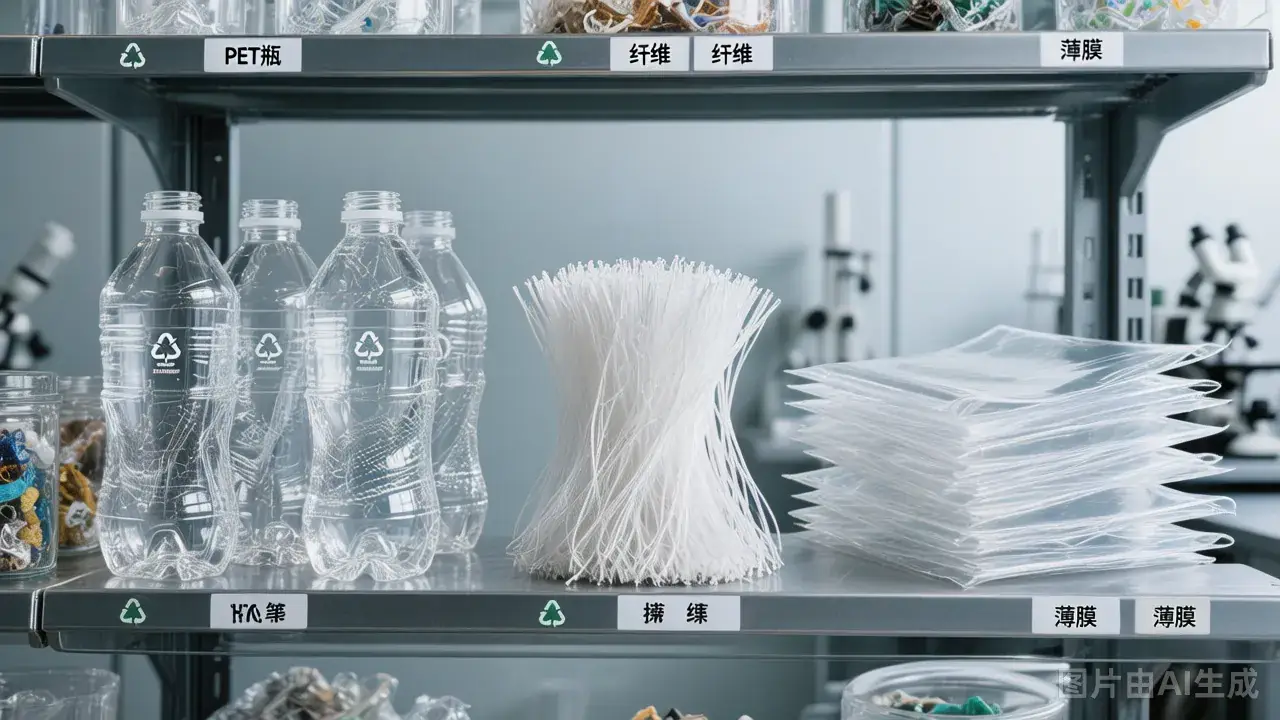
DMT Procurement Guide: How to Choose Solid Flake, Briquette and Liquid Dimethyl Terephthalate
Compare DMT solid flake, briquette and liquid forms across packaging, transport, feeding, storage and downstream applications to support procurement decisions for PBT, PET and PETG customers.
Read more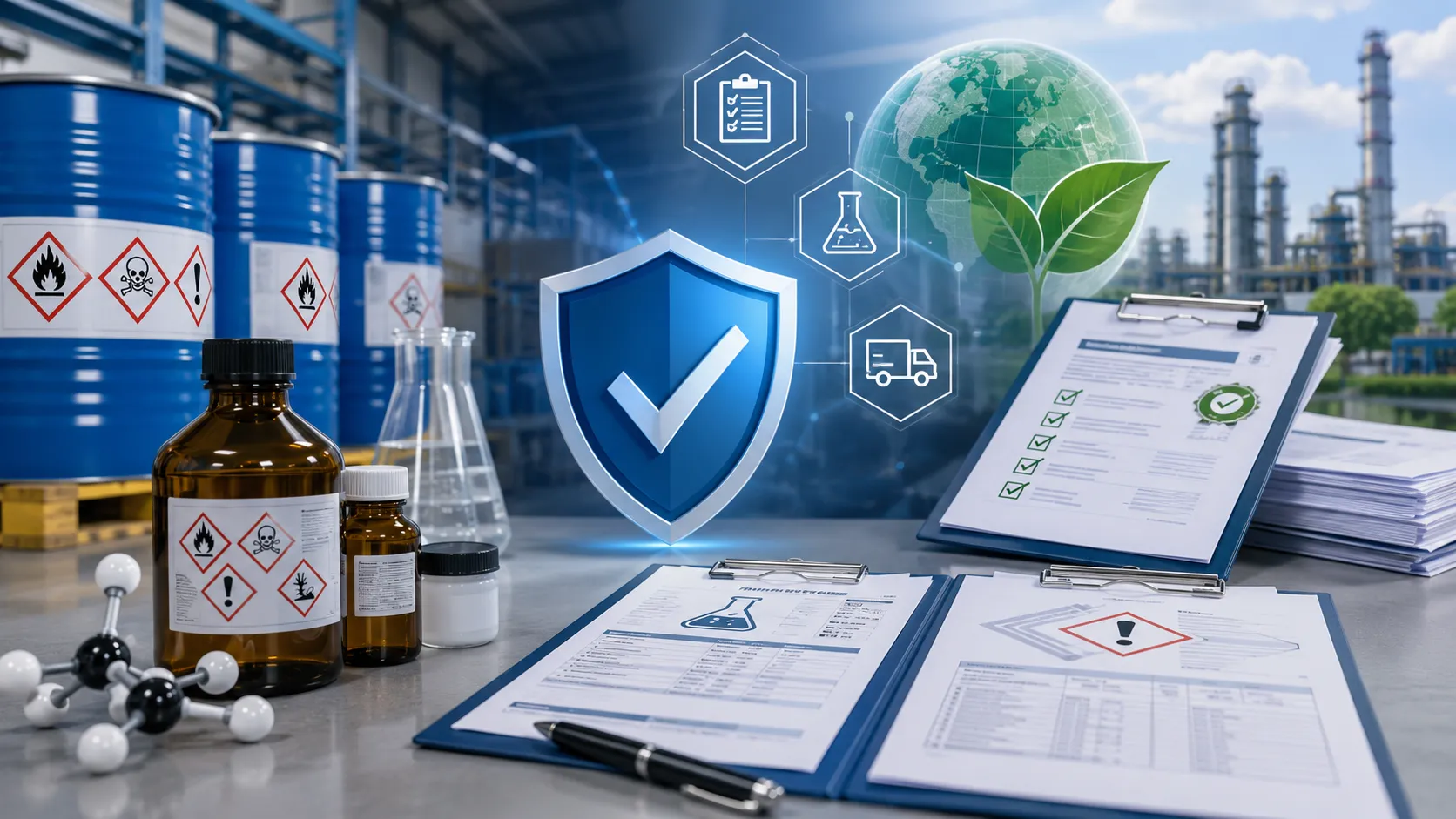 02Industry Trends
DMT Supplier Compliance Review Guide: Hazardous Chemical Management, ISO 14001 and COA/MSDS Documents
DMT procurement should review not only price and purity, but also supplier compliance, hazardous chemical management, ISO 14001, COA/MSDS documents and batch traceability.
Read more 03Industry Trends
Recycled Materials Policy Drives Low-Carbon Polyester Raw Materials: Opportunities for DMT Suppliers
China's policy support for recycled materials and low-carbon industries creates long-term opportunities for low-carbon DMT, polyester-grade Dimethyl Terephthalate and high-quality polyester raw material supply chains.
Read more